

It’s 6 p.m. You’ve had a long day, and you’re already reaching for that glass of wine — or the bag of chips, or the couch, or all three — before you’ve even had a chance to think about it.
Sound familiar?
It’s not a willpower problem. It’s a habit. And here’s the good news, your brain doesn’t stop being able to change just because you’ve hit your 50s. In fact, your brain rewires itself every single day whether it is for a good habit you started or for a not so good habit and whether you’re steering that change on purpose or not.
So, the real question isn’t “why can’t I stick to anything?” It’s “are your current habits helping you become the person you want to be or are they standing in the way?”
Let’s figure out which ones are which, and how to actually shift them for good.
Identify Your Good and Your Bad Habits
Let’s start with taking stock of all your good habits. Grab a notebook and make a list. Remember habits are things you do consistently, not just once in a while.
Now, write down all your bad habits. All of them. No one is judging.
Do you have more bad habits than good habits?
Remember how a habit can rewire your brain, which is a good thing when it is a good habit. But that also means that your bad habits have rewired your brain as well and bad habits can often overshadow the good habits.
Bad habits can also prevent us from creating good habits in addition to hindering you from living your best life. One bad habit often leads to another bad habit.
For example, I have noticed that when I overeat during the holidays, I tend to throw everything out the window, like walking in the morning, taking my supplements consistently, exercising, drinking enough water, getting good sleep. Instead, I tend to say, “once I get back on my eating plan, I will start back on taking my supplements, eating healthy, and exercising again.” Which is ironic, because this is when I really need to do all those things.
Does that ever happen to you?
When we get caught up in bad habits, it tends to spill over into other parts of our lives.
The right habits can benefit our overall health, our careers, our relationships, and life in general.
Why Do We Form Bad Habits In the First Place?
Let’s go back to our bad habits list. Next to each one, try to identify when you “do” that habit.
Ask yourself:
- What usually triggers it?
- When I feel stressed? What creates the stressed-out state?
- When I’m frustrated? What makes you frustrated?
- When I am tired and low on energy? When do I feel most tired and low on energy?
- Have I created a habit related to a specific time of the day?
Asking yourself these questions before you reach for that chocolate bar or that evening drink or whatever the habit is, allow you to figure out your trigger and why the need for the thing you are reaching for.
We all have stressful days and the more tired we get in the day, the easier we get swayed into giving into temptation. But if you see it coming, you can create a plan to avoid it.
Get Clear to Break Bad Habits
To break our bad habits, it is very important to be absolutely clear on what your goals are and what kind of person you really want to be.
For example, if your goal is to be healthy, strong, and have a sharp brain as you age, you need to ask yourself before you take that 6 p.m. drink “will this help me become that person?“
If your routine is to plop down on the couch right after work and not move until you go to bed or get up to get a snack, ask yourself “Is this the action of a person that is healthy, vital, and fit?”
Our actions must match our desired outcomes. Something I had to take a real hard look at for myself. My action did not align with who I wanted to be.
3 Strategies to Break a Bad Habit After 50
There are a few different strategies to break a bad habit, and knowing yourself will help you figure out which strategy will work for you.
- Go cold turkey – you just stop that habit and that’s it. This can work for people who have reached a breaking point. It can be a photo of themselves or finally realizing how this habit is really harming them if they don’t stop right now.
- Trade a bad habit for a good habit. Instead of that drink at 6 p.m., replace it with chamomile or lemon balm tea in a nice tea cup or mug and make it into a ritual.
- Start small and gradually change your habit a little at a time. Instead of a whole chocolate bar, you have ½ a chocolate bar. Then two squares after dinner. Then switch out the two squares of regular chocolate for two squares of 70% dark chocolate, which is actually good for you (in moderation).
Or maybe it is a combination of two different strategies.
What Can I Do Instead?
Here are some suggestions and options of how you can steer yourself away from the habit you want to stop doing and find other ways of treating yourself well.
- Take a luxurious warm bath after a long draining day.
- Take a cold shower to feel energized and to reset your nervous system.
- Call a friend for a pep talk.
- Go for a walk or a run to clear your head.
- Remove yourself from the situation.
- Distract yourself and keep your hands busy while chopping veggies for your meal planning day or dinner.
- Put on your favorite feel-good music and dance around the house.
Figure out what works for you.
Need Other Strategies? Try Box Breathing
Box breathing is a proven breathing technique to help calm your nervous system, reduce stress, improve anxiety and even help with sleep. It also distracts your mind as you count each breath.
So, before you are about to do the thing you know you shouldn’t do or find yourself with racing thoughts or in a stressful situation, stop, take a moment and use the following breathing technique.
- Breathe in slowly through your nose for 4 seconds.
- Hold for 4 seconds.
- Breathe out slowly through your mouth for 4 seconds.
- Hold your breath with empty lungs for 4 seconds.
- Repeat until you feel yourself relax.
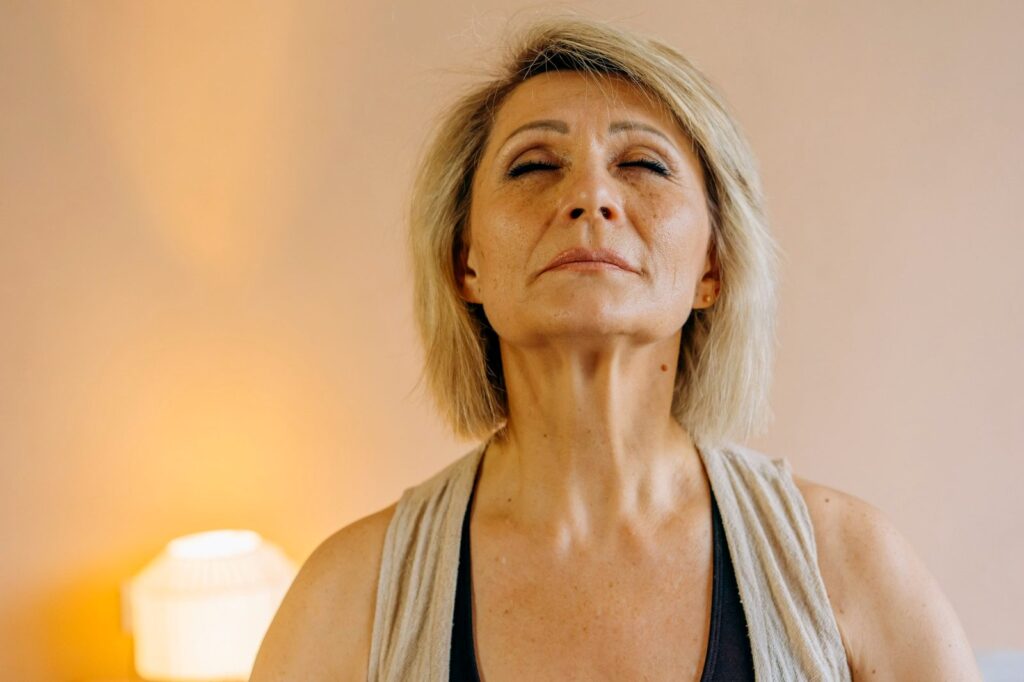
Incorporating this into your daily routine will benefit your overall well-being and can even help you achieve your goals, and the great thing about box breathing or any breathing technique is that you can do it anywhere, wherever you are, no equipment needed.
Stepping outside and performing this technique makes it even more powerful when your day is really stressing you out.
The Navy Seals actually use this technique in high-stress situations, and athletes and artists with performance anxiety often use breathing techniques to calm down, get focused to improve their performance.
Make It Easier For Yourself and Remove the Friction
Don’t set yourself up to fail by exposing yourself to the very temptation you are trying to avoid.
- Don’t have foods you shouldn’t eat in the house.
- Don’t hang out with people that go to the bar every weekend if you are trying to stop drinking or smoking.
- Don’t stay up late if you know that turns into overeating the next day.
Instead:
- Get rid of the junk food from your house. Let your family know, we are eating healthy from now on.
- Get rid of the clutter in your house – constantly having to search for things, seeing accumulated dust and stuff everywhere wears a person down.
- Meal prep on the weekend for a smooth week.
- Put out your running shoes and exercise clothes the morning before.
- Have a plan of what to do when a temptation or stressful situation shows up.
In Conclusion
Breaking a habit isn’t about willpower. It’s about knowing why you do what you do and having a plan for when the temptation shows up.
It comes down to who you want to become, what your goals are, and asking yourself if what you are doing is serving you or harming you. Are your actions aligned with becoming the person you want to be or with achieving the goals you picture for yourself?
So, here’s your homework: pick just one habit from your list — the one that’s costing you the most — and try one strategy from this post this week. Not all of them. Just one.
What habit are you ready to let go of? Let me know in the comments below. I read every one, and I’d love to know what you’re working on.
If you’re in the middle of a bigger life reset, you’ll probably enjoy my “Getting Unstuck After 50” series, where I go deeper into breaking through fear and indecision at any stage of life. Start with Part 1 here.